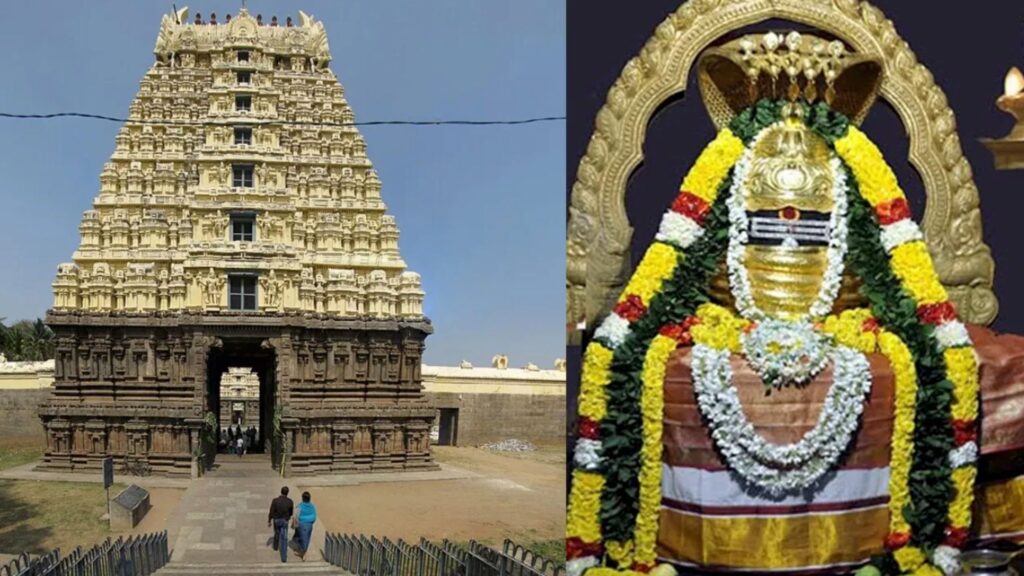
Jalakandeswarar Temple, Vellore is a historic Lord Shiva temple located inside the iconic Vellore Fort in Tamil Nadu. Known for its detailed stone carvings, tall gopuram, sacred traditions and Vijayanagara-era architecture, the temple is an important place for devotees, heritage travellers and visitors exploring Vellore.
In 1921, the Vellore Fort (including the temple) came under the care of the Archaeological Survey of India. Worship had not resumed for many years. In 1981, devotees secretly brought back the deity and reinstated worship. The first kumbabishekam (consecration) was held in 1982, and subsequent ones in 1997 and 2011. It is a hindu worship place of Lord Shiva where devotees come for prayers, perform rituals, and seek blessings.
Whether you are looking for Jalakandeswarar Temple timings, its history, architecture, location inside Vellore Fort, or practical travel information, this guide will help you plan a respectful and well-informed visit.
Jalakandeswarar Temple at a Glance
| Detail | Information |
|---|---|
| Temple name | Sri Jalakandeswarar Temple |
| Location | Inside Vellore Fort, Vellore, Tamil Nadu |
| Main deity | Lord Shiva as Jalakandeswarar |
| Goddess | Akhilandeswari |
| Historical period | 16th-century Vijayanagara period |
| Known for | Kalyana Mandapam, stone carvings, gopuram, Agazhi and temple traditions |
| Regular opening hours | 6:30 AM–1:00 PM and 3:00 PM–8:30 PM* |
| Nearest major railway station | Katpadi Junction |
| Also known as | Jalakanteshwara Temple, Jalagandeeswarar Temple, Vellore Fort Temple |
The temple remained inactive for nearly 400 years before worship resumed in the early 1980s, and today it draws many devotees and tourists.

Table of Contents
Historical Significance and Origins
The history of Jalakandeswarar Temple is closely connected with the history of Vellore Fort and the Vijayanagara Empire. The temple is generally associated with the 16th century and is described by the Vellore District Administration as having been built by Chinna Bommi Nayak during the Vijayanagara period.
Temple tradition says that a Shiva Lingam was discovered in a waterlogged area beneath an anthill. According to the story, Chinna Bommi Nayak received divine guidance in a dream and built a temple at the site. Because the Lingam was associated with water, the deity came to be known as Jalakandeswarar—commonly understood as Lord Shiva who resides in water.
A Historical Timeline
- 16th century: The temple was constructed during the Vijayanagara period inside Vellore Fort.
- Later centuries: Worship at the temple was interrupted for a long period, while the fort passed through several political eras.
- 1921: The Archaeological Survey of India took responsibility for the Vellore Fort complex.
- 1981: The main deity was reinstalled and regular worship resumed.
- 1982: A kumbabishekam was held after worship returned to the temple.
This history makes the temple more than a place of worship. It is also an important symbol of Vellore’s architectural, religious and cultural heritage.
For visitors interested in the larger fort complex, read our guide to Vellore Fort.
A recent study “Impact of Tourism in Economic Development – Vellore District” (2024) acknowledges Jalakandeswarar Temple as one of several religious and cultural sites contributing to tourism in Vellore.
Divine Myths of the Temple
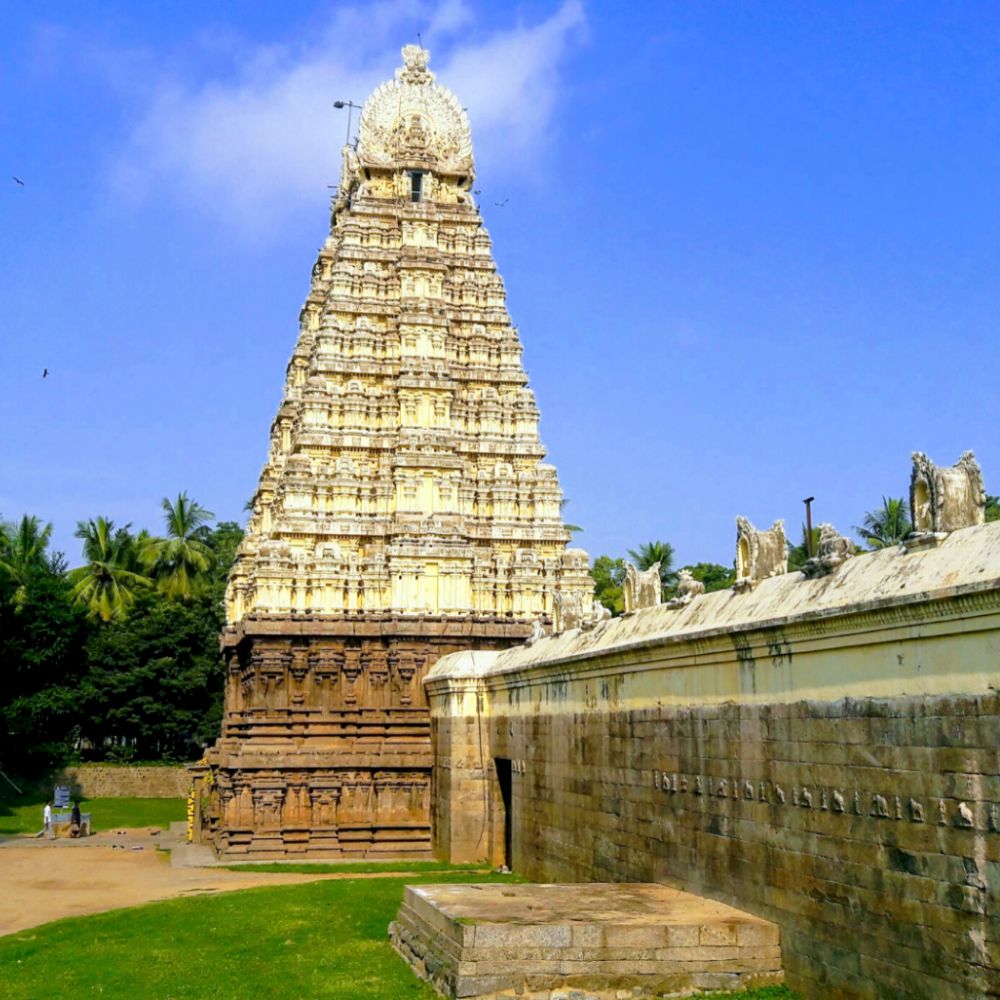
Lord Jalakandeswarar is a form of Lord Shiva, the eternal god of the temple, honoured by devotees for his presence. This temple plays an important role in Hindu rituals and a major place for Lord Shiva worship in the region.
The speciality of this temple is, all the three lords are with their consorts- Lord Shiva with mother Parvathy, Lord Vishnu with mother Mahalakshmi and Lord Brahma with mother Saraswathy.
There are several myths and legends associated with Jalakandewarar temple. One popular myth is that the temple was built on a spot where holy water once existed and Shiva manifested to bless the land.
Architectural Highlights
The Jalakandeswarar temple is a magnificent example of Dravidian Architecture where the style is highlighted by stone carvings, tall gopurams rising over 100 feet, carved with fine detail and huge pillars, wooden gates, Vimana, and stunning sculptures.
This temple has a mandapam that has a two-faced sculpture of a bull and an elephant and a hall supported by symbolic creatures of horses, yalis(lion like creatures and carvings of god and goddess and is as beautiful as 1000 pillared mandapam in Madurai Meenakshi Amman temple.
Important Architectural Highlights
- The tall gopuram features detailed carvings and traditional South Indian temple design.
- The Kalyana Mandapam is especially known for its richly sculpted stone pillars.
- The temple includes carvings of horses, yalis and other symbolic figures.
- The temple is associated with the Agazhi, the water boundary surrounding the fort complex.
- The temple’s pillared halls are an important example of Vijayanagara-era sculpture.
Holy water and its Significance
The temple sits within a water tank (called Agazhi in Tamil) and is surrounded by water. The tank is traditionally claimed to have a circumference of 8,000 ft, though some sources simply describe it as a moat-like water boundary.
This water is used for the bathing of deity(Abhishekam), drawn from the earliest well called Ganga Gouri theertham, considered powerful for purification purposes.
In Hinduism, water has a huge importance, as a symbol of purity, spiritual cleansing, and rituals at temples. The Vedas identify water as the essence of spiritual sacrifice, a process of attaining spirituality.
Religious Significance and Festivals
Are there any festivals celebrated in Jalakandeswarar temple? Yes, The temple has a main role in Hindu religious life especially for devotees of Lord Shiva and deeply influences local traditions and spiritual life of the community.
Temple celebrates various festivals throughout the year like Maha Shivaratri, Karthigai Deepam, Panguni Uthiram, and Arudra Darshan that deepen the spiritual connection between devotees and deity. Other festivals celebrated here are
10 days Chithra Poornima (April-May)
10 days Aadi Pooram (July-August)
Vinayaka Chaturthi in Avani(August – September)
Navaratri ( september-October).
Temple Restoration and Preservation
The Tamil Nadu government and Archaeological Survey of India’s (ASI) efforts for restoration helped to preserve the temple’s carvings and sculptures, aimed to maintain structural stability and artistic beauty.
Recently, restoration efforts have been all about fixing up the damaged parts of the temple, strengthening its base, and giving a good clean to the old carvings and wall painting to bring them back to their old glory.
The Jalakandeswarar temple is designated as a protected monument for its cultural, historical and architectural significance, making sure it receives care wanted for its preservation.
Best Time to Visit Jalakandeswarar Temple
Don’t know when to visit Jalakandeswarar temple?
The regular listed Jalakandeswarar Temple timings are:
- Morning: 6:30 AM to 1:00 PM
- Evening: 3:00 PM to 8:30 PM
The temple is located inside Vellore Fort, Vellore, Tamil Nadu. Festival days, special poojas and local arrangements may affect opening hours, so it is best to confirm before your visit.
Visitor Etiquette
- Wear modest and comfortable clothing.
- Remove footwear where required.
- Follow temple staff instructions during poojas and darshan.
- Ask before taking photographs; photography may be restricted in the sanctum and during rituals.
- Allow additional time during Maha Shivaratri, Karthigai Deepam, Navaratri, Chitra Pournami and other festival periods.
Best Time to Visit Jalakandeswarar Temple
Early morning is usually a comfortable time to visit Jalakandeswarar Temple, Vellore, especially for travellers planning to explore Vellore Fort on the same day. Weekdays may offer a calmer experience, while festival days bring a more vibrant devotional atmosphere and larger crowds.
The months from October to March are generally more comfortable for sightseeing in Vellore due to the relatively cooler weather.
There is no entry fee, making it anyone can visit the temple and the visitors will get basic facilities like drinking water, areas for resting, and also provided spaces for prayers. The temple is easily reached from Vellore and other nearby attractions, making it easy for tourists who come to explore the region.
Government Museum, Science Park, Vainu Bappu Observatory, Srilakshmi Golden Temple, Big Mosque & St. John’s Church and Yelagiri Hill station are the other tourist attractions around Vellore. You will get exclusive offers, if you visit the temple during monsoon and winter seasons, when surroundings appear green and heavenly with rainfall.
Visitor Tips & Etiquette
To make your trip comfortable and respectful:
- Dress Code: Wear modest clothing. Cover shoulders and knees.
- Shoes: Remove footwear before entering the inner sanctum.
- Photography: Allowed in most areas, but avoid disturbing rituals.
- Festival Days: Carry water, light snacks, and be ready for queues.
- Accessibility: The temple is friendly for families and elderly visitors, though some steps may need assistance.
How to Reach Jalakandeswarar Temple
By Train
- Katpadi Junction is the most convenient major railway station for many visitors travelling to Vellore. Read our Katpadi Railway Station guide for arrival and local travel information.By Road
By Road
- The temple is located in central Vellore, inside Vellore Fort, and can be reached by local taxi, auto-rickshaw or private vehicle.
By Air
- Chennai International Airport is the closest major airport for visitors travelling to Vellore. From Chennai, travellers can continue by road, bus, train or private taxi.
Nearby attractions to combine with your trip: Government Museum Vellore, Christian Medical College Chapel, and Amirthi Zoological Park.
Experiences Not to Miss
- Watch the temple’s reflection in the Agazhi water tank at sunrise.
- Attend evening aarti for a spiritual atmosphere.
- Explore the surrounding Vellore Fort, which has other temples, mosques, and churches inside.
- During Karthigai Deepam, witness the magical glow of thousands of lamps.
A Short Vellore Fort and Temple Itinerary
A visit to Jalakandeswarar Temple can be combined with a walk through Vellore Fort, its historic structures and nearby attractions. Plan at least two to three hours if you want to experience the temple and fort without rushing.
For a wider city plan, explore our one-day Vellore itinerary. Visitors planning a larger temple circuit can also explore Spiritual Tourism in Vellore, Vallimalai Murugan Temple and Theerthagiri Murugan Temple.
Conclusion
In conclusion, Jalakandeswarar temple in Vellore is a great example of Vijayanagar architecture. It is a place of worship and a symbol of TamilNadu’s unique spiritual experience. Whether you are a devotee or a tourist who comes to explore the beauty and peace, Jalakandeswarar temple welcomes you with glad hands. Its annual festivals, stunning sculptures, and peaceful surroundings give you an unforgettable journey.
Looking for a comfortable hotel to stay near in Jalakandeswarar temple?
JK Inn is the best hotel in Vellore you can consider choosing. It is just 1.5 from the temple, where you get comfortable rooms and best dining options.
You will get exclusive offers in hotels, if you visit the temple during monsoon and winter seasons, when surroundings appear green and heavenly with rainfall. With transportation services and tourist attractions, Vellore is a perfect destination for explorers.
Frequently Asked Questions
What are the temple timings?
The temple is generally open from 6:00 AM – 12:00 PM and 4:00 PM – 8:00 PM (timings may vary on festivals).
Is there an entry fee?
No, entry is free for all visitors.
Can non-Hindus visit?
Yes, visitors of all faiths can enter the temple, but respect local customs.
What is the dress code?
Modest attire covering shoulders and knees is recommended.
Is the temple part of Vellore Fort?
Yes, the temple is located inside the historic Vellore Fort.
Who built Jalakandeswarar Temple?
The temple is associated with the Vijayanagara period and is described as having been built by Chinna Bommi Nayak in the 16th century.
Can visitors take photos inside the temple?
Photography rules can vary by area and during rituals. Check with temple staff and avoid taking photographs in restricted areas or without permission.
What is the full postal address of Jalakandeswarar Temple?
The full postal address is: Sri Jalakandeswarar Temple, Vellore Fort, Vellore – 632 001, Vellore District, Tamil Nadu, India.
Is Jalakandeswarar Temple the same as the Golden Temple in Vellore?
No. Jalakandeswarar Temple is a historic Lord Shiva temple inside Vellore Fort. The Sri Lakshmi Narayani Golden Temple is a separate temple at Sripuram, dedicated to Goddess Lakshmi.